
What is Digital Marketing? The Ultimate Guide for 2026
Discover the foundational principles, core acquisition channels, key business advantages, and actionable blueprints that define digital marketing in 2026.
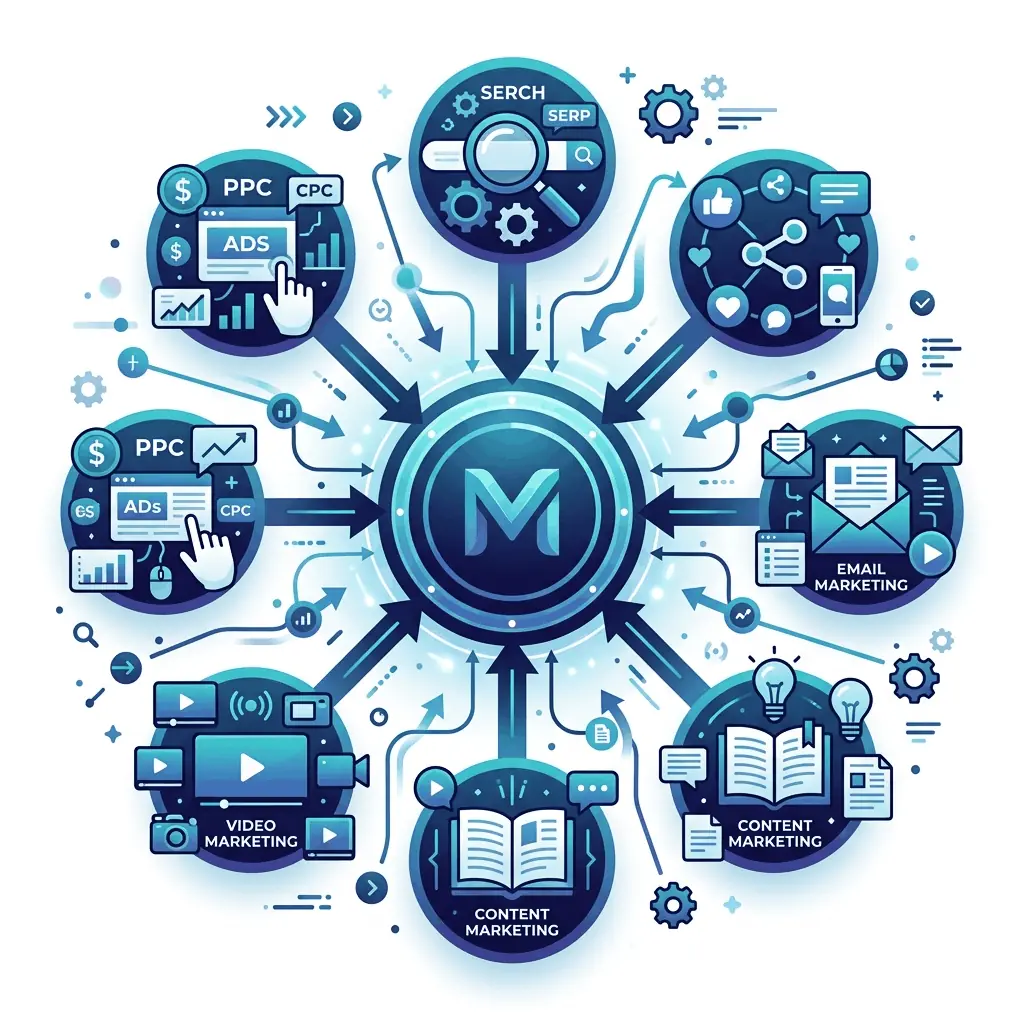
Modern Marketing Summary
Digital marketing refers to the practice of promoting products, services, or brands through internet-connected devices and digital channels. Unlike traditional media, modern digital campaigns leverage real-time analytics, hyper-specific demographic targeting, and interactive media structures to maximize return on investment (ROI) and build deep brand authority.
Introduction: Understanding the Digital Marketing Meaning
To succeed in the modern business environment, leaders must have a clear understanding of what is digital marketing and how its channels function. At its core, the digital marketing meaning covers any advertising activity conducted via digital technologies. By engaging users through web platforms, social portals, search engine indexes, and mobile applications, companies can build custom relationships with potential clients at a fraction of the cost of offline media.
In 2026, digital marketing has evolved beyond static banner ads. It now represents a complex ecosystem powered by machine learning algorithms, automated data pipelines, and personalized messaging structures. Consumers no longer consume marketing passively. Instead, they interact with brands via AI chatbots, personalized content feeds, and social commerce storefronts. As a result, businesses must build structured, integrated campaigns that coordinate multiple touchpoints, ensuring a cohesive and frictionless buyer journey.
The Evolution: From 1994 Web Portals to 2026 AI Overviews
The history of digital marketing is tied closely to the progression of internet infrastructure and consumer technology. In 1994, the first clickable banner ad launched, recording a click-through rate of over 44%. By the late 1990s, search engines like Yahoo and Google arrived, establishing the framework for web crawling, index compiling, and search query retrieval.
In the 2000s, social platforms like Facebook and YouTube emerged, turning the web from a read-only library into a dynamic social community. The introduction of the smartphone in 2007 shifted consumer focus to mobile applications, location-based targeting, and vertical-video media consumption.
As we navigate 2026, the industry is experiencing a massive shift driven by artificial intelligence and privacy regulations. Third-party cookie deprecation has forced a return to first-party data capture, while generative AI and search-based AI Overviews (such as Google’s SGE and Perplexity) require brands to move beyond traditional blue links. To capture traffic, brands must build high-quality content hubs optimized for both human users and AI query parsers.
Core Channels of Digital Marketing
Successful marketing initiatives do not rely on a single channel. Instead, they run across several interconnected types of digital marketing. Understanding these channels helps teams allocate budgets and target the right user segments effectively.
Search Engine Optimization (SEO)
SEO focuses on optimizing web structures and content to secure organic search rankings, driving high-intent discovery traffic.
Pay-Per-Click Advertising (PPC)
PPC buys immediate visibility by bidding on search queries and audience targets, paying only when a user interacts with the ad.
Social Media Marketing (SMM)
SMM engages communities, fosters brand loyalty, and distributes media across networks like LinkedIn, Instagram, and TikTok.
Content Marketing
Content marketing builds authority and solves buyer challenges by creating valuable articles, guides, case studies, and tools. This forms a core pillar of inbound marketing.
Email Marketing & Automation
Email marketing nurtures leads, drives repeat sales, and coordinates customer communication using automated behavioral triggers.
Influencer Marketing
Influencer marketing leverages established social creators and authoritative voices to secure direct brand endorsements and reach.
1. Search Engine Optimization (SEO): The Foundation of Organic Discovery
To appreciate what is seo in digital marketing, developers and copywriters must treat search engines as automated indexing pipelines. SEO is the science of structuring a website and writing content so that search algorithms rank your pages highly for relevant queries. This is split into three main components:
- Technical SEO: Ensuring search crawlers can parse and index your codebase without blocks. This includes optimizing crawl budgets, creating clear sitemaps, using structured schemas, and improving Core Web Vitals to secure fast load times. Read our guide on how to fix crawlability issues for a deep dive.
- On-Page SEO: Crafting high-quality articles, structuring pages with semantic HTML headers (H1, H2, H3), and writing keyword-optimized title tags, meta descriptions, and image alt text.
- Off-Page SEO: Building authority by earning high-quality backlinks from reputable websites within your industry, signaling credibility to search engines.
At TechAuditPros, we help enterprise clients analyze their code structures, resolve indexing blocks, and implement schemas to capture organic search share. Discover our specialized services by visiting our Technical SEO Audit Page or exploring our Enterprise SEO Solutions.
2. Pay-Per-Click Advertising (PPC): Buying Instant Search Intent
If SEO is a long-term investment, PPC is a direct way to secure instant visibility. Understanding what is ppc in digital marketing involves examining search auction frameworks. PPC campaigns let advertisers bid on specific keywords and phrases. When a user searches for those terms, the advertiser's ad appears at the top of the search result page. The advertiser pays the search engine only when a user clicks the ad.
The performance of a PPC campaign depends on two factors: the bid amount and the Quality Score. The Quality Score is a metric used by platforms like Google Ads to measure the relevance and quality of your ads, keywords, and landing pages. Optimizing landing pages for speed, relevance, and conversion rates lowers cost-per-click (CPC) and maximizes conversion values. This is why connecting custom web development with paid search campaigns is critical to success.
3. Social Media Marketing (SMM): Engaging Communities and Fostering Trust
Social Media Marketing leverages networks like LinkedIn, Instagram, TikTok, Facebook, and X to build brand awareness, distribute content, and interact with buyers. Modern SMM is divided into two primary disciplines:
- Organic Social: Creating helpful, engaging, and educational content that is shared naturally. This helps humanize your brand and build trust.
- Paid Social: Using the advanced tracking systems of social networks to display ads to highly segmented demographics based on job titles, interests, online behaviors, and lookalike modeling.
In B2B sectors, platforms like LinkedIn are crucial for distributing detailed case studies, client results, and corporate announcements, directly supporting sales pipelines.
4. Content Marketing: Building Brand Equity Through Authority
To understand what is content marketing in digital marketing, businesses must shift their focus from direct selling to value creation. Content marketing is a strategic approach centered on creating and distributing valuable, relevant, and consistent content to attract and convert a target audience.
Rather than pitching products directly, authority-driven content addresses the specific questions, pain points, and technical challenges of your buyers. This includes publishing technical blog posts, downloadable whitepapers, interactive cost estimators, and explanatory videos. By resolving problems for free, you build trust and establish your brand as the leading authority in your space, ensuring that when prospects are ready to buy, they turn to you. For instance, our article on SaaS vs Custom Software helps stakeholders make informed architectural decisions before they choose a development partner.
5. Email Marketing & Automation: Cultivating High-Yield Customer Relationships
Email marketing remains one of the highest-converting digital channels, boasting an average return on investment (ROI) of $36 for every $1 spent. The channel's strength lies in its ability to deliver personalized messages directly to an owned audience.
Modern email marketing relies heavily on marketing automation. Instead of sending generic newsletters to an entire list, companies set up automated workflow triggers based on user behavior. For example, if a user downloads a technical guide, the system can automatically send a series of educational nurture emails. If they view a services page multiple times, it can trigger a direct follow-up from a sales representative, creating a highly responsive and personalized buying experience.
6. Influencer Marketing: Leveraging Social Proof and Direct Endorsements
Influencer marketing involves collaborating with content creators and industry figures who have built trust with a specific audience. In B2C, this often means partnering with lifestyle creators to display products in real-world contexts. In B2B, it involves collaborating with developers, consultants, and industry analysts to review custom platforms, software tools, or audit methodologies.
By leveraging the established credibility of these creators, brands can bypass traditional advertising fatigue, reaching engaged audiences through authentic endorsements that drive conversions.
Key Advantages of Digital Marketing: Why Businesses Must Pivot
Implementing a modern marketing strategy offers clear business benefits of digital marketing. By replacing or supporting offline print, television, and radio campaigns with digital campaigns, brands can optimize their growth budgets and improve sales efficiency.
The core advantages of digital marketing include:
With offline media, tracking return on spend is challenging. Digital marketing tracking frameworks allow brands to see exactly how many impressions, clicks, form submissions, and sales a specific ad or content piece generated, enabling data-driven budget optimization.
Digital ads can be targeted to narrow demographics. Advertisers can segment audiences by geography, age, interests, online behavior, search history, and job title, ensuring campaigns are displayed only to high-probability buyers.
A single digital campaign can reach customers globally with ease. Simultaneously, local businesses can target users within a specific radius of their physical office, capturing high-intent nearby customers.
Digital channels allow companies to set small daily limits and scale spend only when positive return-on-ad-spend (ROAS) is verified. This flexibility reduces risk and allows small startups to compete with large enterprise brands.
The importance of digital marketing lies in its efficiency. In a competitive market, relying on unmeasured media leads to wasted spend. Digital marketing ensures every dollar is accounted for, tracked, and optimized to drive growth.
How to Start a Digital Marketing Campaign: A Step-by-Step Blueprint
For beginners and established companies looking to refresh their online strategy, launching a campaign requires careful planning. Using standard digital marketing basics, brands can launch campaigns that build traction and scale predictably.
Here is a step-by-step roadmap to guide your execution:
- Define Your Ideal Buyer Persona: Research your audience's demographics, challenges, online habits, and preferred content channels.
- Establish SMART Goals: Set specific, measurable, achievable, relevant, and time-bound goals (e.g., "Increase qualified organic leads by 30% in 6 months").
- Conduct Keyword and Search Research: Identify the specific terms and questions your target audience searches for. This guides content creation and paid bidding strategies.
- Set Up Web Assets and Tracking: Ensure your website is fast, responsive, and easy to navigate. Set up analytics tracking (like Google Analytics and conversion tracking) to record user actions. If your site needs performance optimization, read our guide on SEO-friendly web design to learn more.
- Select Your Launch Channels: Pick the channels that align best with your audience. For example, B2B campaigns often focus on technical SEO, content writing, and LinkedIn advertising, while B2C brands may launch visual ads on Instagram and TikTok.
- Create High-Quality Content: Write detailed blog posts, design informative guides, and produce videos that address your audience's challenges.
- Launch and Monitor: Set up your tracking parameters and start your campaigns. Monitor metrics like click-through rate, cost-per-acquisition, and conversion rate.
- Test, Analyze, and Optimize: Run A/B tests on your ad copy, test different landing page layouts, and refine your bids to maximize campaign performance and efficiency.
Connecting Marketing Strategy to Software Engineering
Modern digital campaigns rely on robust technical infrastructure. If your website is slow, has javascript errors, or is built on legacy platforms, your marketing performance will suffer. Search engines downrank slow websites, and users leave pages that load slowly, reducing the conversion rates of your paid campaigns.
TechAuditPros bridges the gap between digital marketing and software engineering. We help brands analyze their codebases, audit server logs, and implement structured schemas to build fast, visible, and structurally optimized websites. We work with clients to resolve technical debt, build custom dashboards, and integrate secure databases, supporting long-term growth. To explore how we can support your business, visit our Digital Marketing Services Page or explore our custom development services.
Request Your Free Technical Audit
Consult with our lead technical SEO and performance engineers. Receive a comprehensive roadmap identifying and resolving architectural bottlenecks on your platform.
Frequently Asked Questions
What is the main purpose of digital marketing?
The main purpose of digital marketing is to connect with target audiences in the digital spaces they inhabit, driving brand awareness, qualified traffic, conversions, and long-term customer loyalty through measurable online channels.
How does digital marketing differ from traditional marketing?
Traditional marketing relies on static print, billboards, radio, and television broadcasts, which are typically expensive and offer limited tracking. Digital marketing operates through internet-connected devices, offering real-time performance analytics, demographic and behavioral hyper-targeting, and interactive bidirectional engagement.
What skills are needed for digital marketing?
Success in digital marketing requires a mixture of analytical and creative skills. Key competencies include data analysis and tracking setup, Search Engine Optimization (SEO), copywriting, content strategy, graphic design, paid advertising management, email automation design, and basic HTML/CSS editing.
Is digital marketing cost-effective?
Yes, digital marketing is highly cost-effective because it allows brands to set precise daily budgets, pay only for actual interactions (such as impressions or clicks), target high-intent search terms, and continuously optimize campaigns using direct return-on-investment (ROI) data.
What is content marketing in digital marketing?
Content marketing in digital marketing is a strategic approach focused on creating and distributing valuable, relevant, and consistent content (such as blog posts, ebooks, videos, and guides) to attract and retain a clearly defined audience, ultimately driving profitable customer action.
How long does it take to see results?
Paid marketing campaigns (like PPC search ads or paid social) can generate traffic and leads within hours of launch. In contrast, organic growth strategies like Search Engine Optimization (SEO) and Content Marketing are cumulative investments that typically take 3 to 9 months to show substantial organic search authority and ranking improvements.