A construction site with workers and a crane

Construction ERP · UAE · BOQ · retention · progress billing · WPS

Construction ERP Software for the UAE, built around certified value, retention and the site that is never near the office.

A contractor in the Emirates runs on a BOQ, a set of subcontractor certificates, retention held back, progress bills that carry VAT on the certified value, WPS for site labour, and materials that arrive at a site forty kilometres from the accounts. The vendors ranking for this search sell all of that as modules and none of them publishes a price or says when a spreadsheet is enough. We build custom systems for UAE contractors from an engineering team in Kochi, four hours away, and this page names the ten ledgers a contractor’s system must carry and how the UAE rules land on each.

TechAuditPros builds construction ERP systems for contractors in Dubai, Abu Dhabi and across the UAE — BOQ-based project costing, variations, subcontractor certificates, retention, progress billing with VAT on certified value, WPS payroll for site labour, EOSB accrual, equipment and materials to site, and PINT-AE e-invoicing — from an engineering team in Kochi, India, four hours from Dubai. No UAE office, said first. “Construction ERP software UAE” is searched 480 times a month at a difficulty of five; the products ranking for it (2,000 UAE companies, thirty years, FIDIC support) are real and none prices itself. For a subcontractor with one crew, a good spreadsheet and the accounting package you have is enough; we say so.

What ranks

Four hundred and eighty contractors a month search for this. Almost nobody has written them a page.

“Construction ERP software UAE” has a keyword difficulty of five — the softest term in the whole UAE export — and the pages ranking for it are product vendors: one with two thousand UAE companies and eight thousand words, one with thirty years and FIDIC in the module list, and a row of “request a demo” buttons. They are real products. What they do not do is explain how the UAE rules land on a contractor’s books, or say when a spreadsheet is enough.

2,000+ UAE companies · 8,500 wordsthe UAE product ranking first: BOQ costing, subcontractors, retention, progress billing, WPS, equipment; no price
30+ years · 30,000 users · FIDICan international construction ERP with a UAE page: CVR, reverse charge on imports, EOSB; four FAQs; no price
“Request a demo”what every other UAE construction ERP page publishes instead of a number
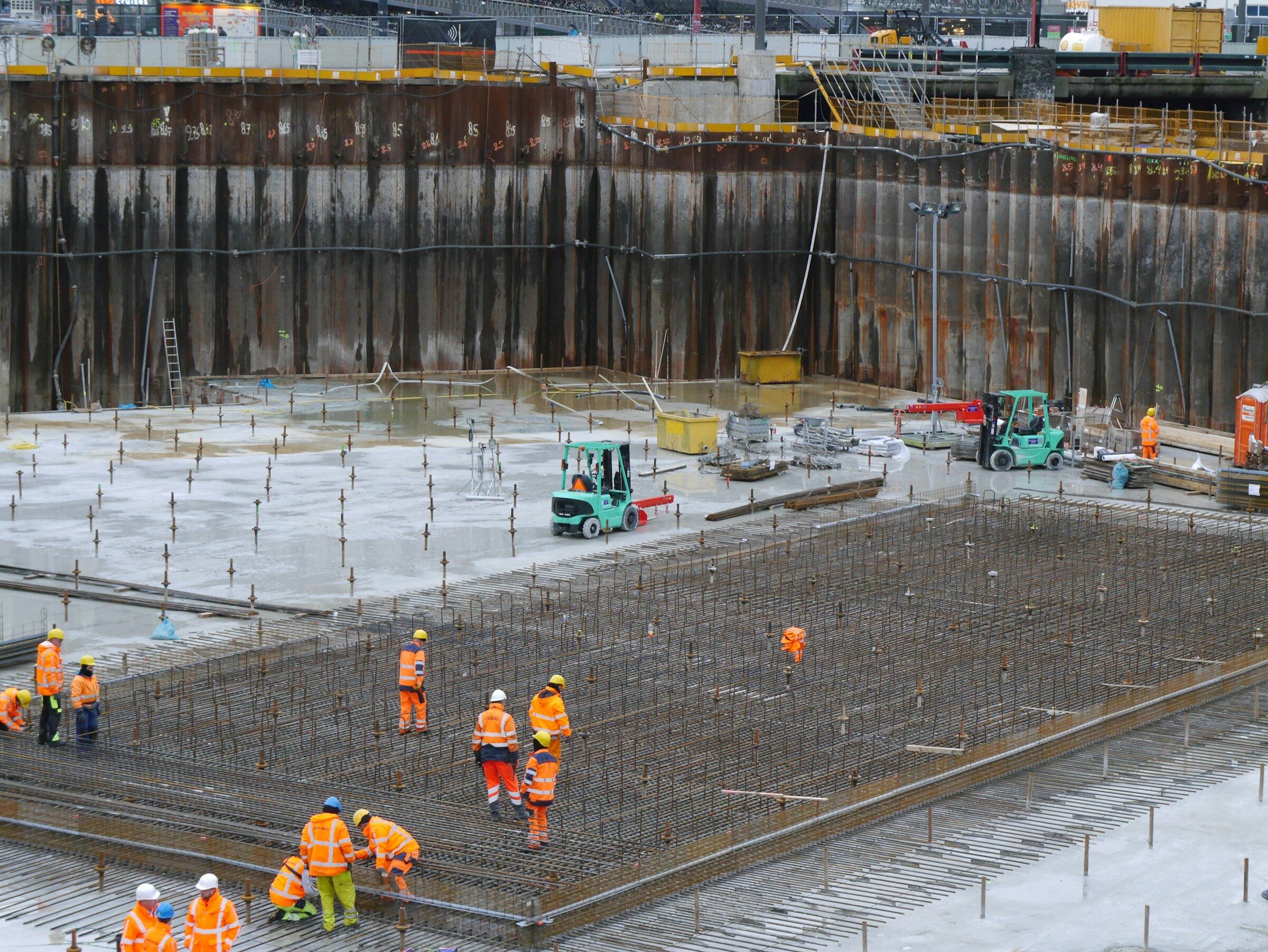
A group of construction workers around a site
The people who will actually enter the data. Design for them, not for the demo.

Site and office

The site is forty kilometres from the accounts. That distance is the whole problem.

Every construction system fails at the same point: the delivery note is on site, the invoice is in the office, and the two meet a month later in a spreadsheet. A contractor’s system has to be entered from the site — on a phone, offline, by a foreman in a hard hat — and read in the office the same afternoon.

Construction workers in hard hats and safety vests on site
The siteDeliveries, timesheets, progress photos, variations spotted — captured where they happen.
Two women in hard hats discussing blueprints
The officeCertificates, retention, VAT, WPS, the bank’s CVR — read from the same record, the same day.
Two construction workers reviewing plans on a tablet
Ten ledgers, one record. The drawings changed; so should the numbers.

The ten ledgers

Ten things a UAE contractor’s system has to carry, from LOA to final account.

Vendors list modules. A contractor thinks in ledgers — the ten numbers that decide whether the next site opens. Here they are, with the UAE rule that lands on each.

  1. 01

    BOQ & estimate

    The tender BOQ as the cost baseline, rates by trade, and the estimate that becomes the budget the day the LOA arrives.

  2. 02

    Variations

    Priced, submitted, approved or rejected — with the paper trail the consultant will ask for six months later.

  3. 03

    Subcontractor certificates

    Back-to-back with the main certificate, retention deducted, advances recovered, WPS evidence attached.

  4. 04

    Retention

    Held at 5–10% on every certificate, tracked per contract, released at DLP end — a number, not a memory.

  5. 05

    Progress billing

    Interim payment applications from certified quantities, VAT at 5% on the certified value, PINT-AE e-invoice on approval.

  6. 06

    Materials to site

    Purchase to site, not to store; delivery notes against the BOQ item; wastage visible per project.

  7. 07

    Equipment

    Owned and hired plant charged to the project by the hour or day; idle time shown, not hidden.

  8. 08

    Site labour & WPS

    Timesheets by project and trade, WPS SIF files on time, EOSB accruing per worker.

  9. 09

    Cost value reconciliation

    Cost to date against certified value against budget, per project, every month — the report the bank asks for.

  10. 10

    Cash

    Certified but unpaid, retention receivable, subcontractor payable, bank guarantees outstanding. The number that decides whether the next site opens.

The UAE rules

Where VAT, WPS and the reverse charge land on a contractor, specifically.

Generic ERP pages say “VAT-compliant”. A contractor needs four specific things to be right, and a system that gets them wrong produces FTA penalties and a WPS block on the same month.

  • VAT on certified value. 5% on each interim payment application, on what the consultant certified, with retention handled per the FTA’s date-of-supply rules for retention payments.
  • Reverse charge on imports. Materials and plant imported for the project self-accounted in the return, not paid twice or missed.
  • WPS for site labour. Timesheets by project feed the SIF file on MoHRE’s timing; a late file blocks new visas across the company, not just the site.
  • EOSB accrual. Gratuity accrues per worker under UAE Labour Law and is a liability in the accounts from month one, not a shock at demobilisation.
  • PINT-AE e-invoicing. Progress bills leave the system as structured invoices through an accredited provider, Phase 2 from July 2026 per current guidance.
  • Free zone and mainland. A JAFZA-registered contractor invoicing a mainland developer needs the right entity and treatment on every document.

Rates, thresholds and dates move; the system reads them from configuration and we point you at the FTA and MoHRE for the current text. The compliance ledger for UAE systems in general is on the ERP page.

Workers on scaffolding against a clear blue sky
Every worker on this scaffold is a WPS line, an EOSB accrual and a timesheet against a BOQ item.
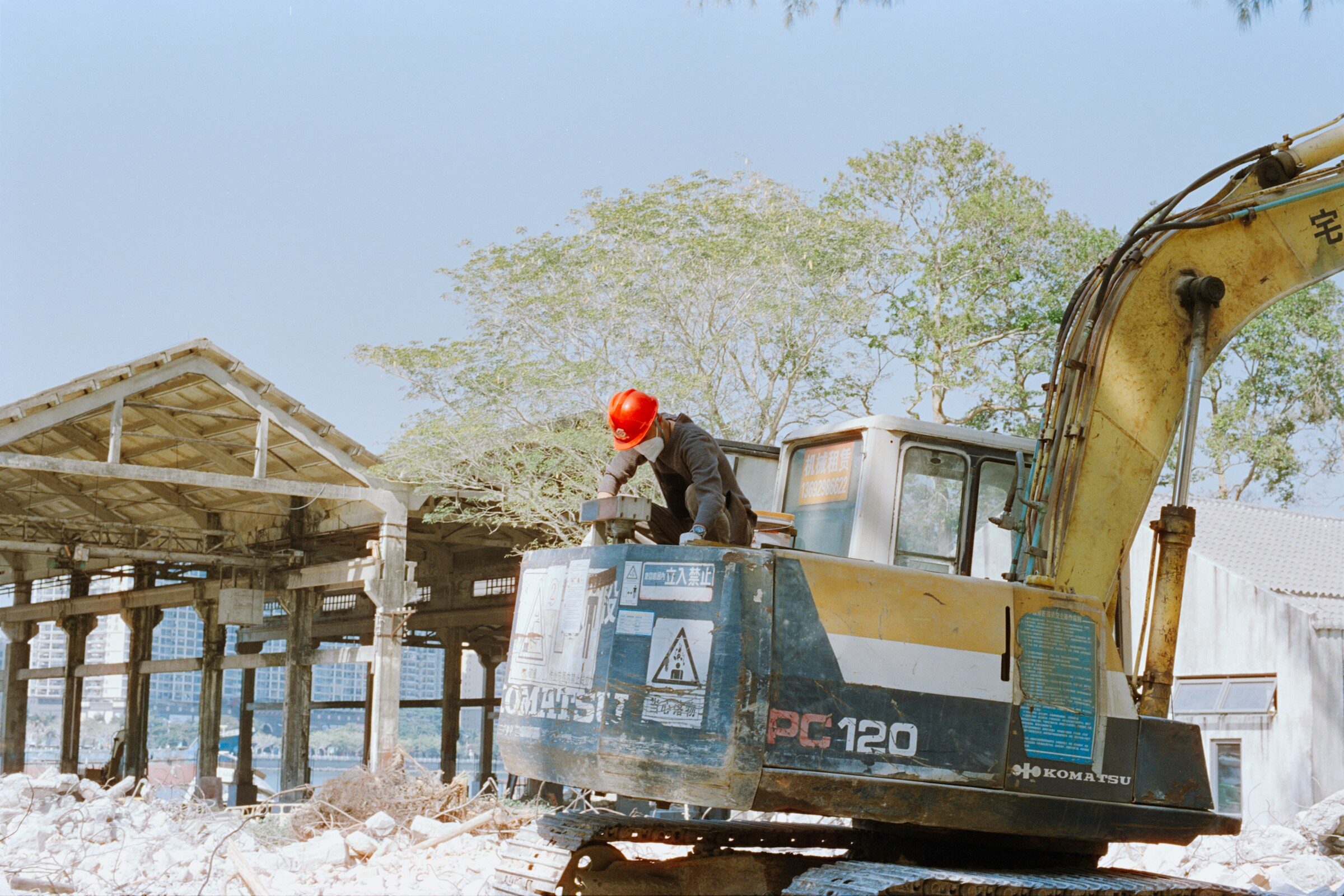
A worker in a hard hat beside an excavator
One crew, a few live jobs: a disciplined spreadsheet beats a system nobody enters.

Spreadsheet, product, or build

The three honest answers, in the order we give them.

We build custom systems, which is a bias. So here is the order we actually use on the first call with a contractor.

A spreadsheet

One crew, a handful of jobs, no subcontractors below you.

Keep the accounting package, run one disciplined BOQ sheet per job, use a WPS bureau. The system earns its place later.

A product

Several concurrent contracts, standard forms, retention both ways.

The products ranking here, tested on one progress bill from BOQ to PINT-AE with retention deducted — in the demo, with your contract. If it needs a “localisation partner” for that, keep looking.

A build

The way you cost, certify or subcontract is the reason you are still on sheets.

Unusual back-to-back terms, plant charged your way, a group of entities across free zones, a bank that wants CVR in its own format. A system built around the process stops the workarounds.

What it costs

Nobody ranking for this search publishes a price. Here is what moves it.

Every construction ERP page in the UAE ends in a demo request. General UAE ERP pricing, as a Dubai reseller lists it, runs $20–$99 per user per month for the global products, before construction modules and implementation. Ours comes after walking one real contract with you, and these four things move it.

01

Concurrent contracts and entities

One company, five sites is one system. Three entities across two free zones with a JV is another.

02

Who enters from site

Every site engineer with a phone is a user; per-user products charge for each. Model the seats at your busiest month.

03

The subcontractor layer

Back-to-back certificates, retention both ways and WPS evidence for subcontracted labour are where products start needing configuration.

04

The bank’s report

If a financier wants CVR in its own format every month, the system either produces it or someone rebuilds it in Excel forever.

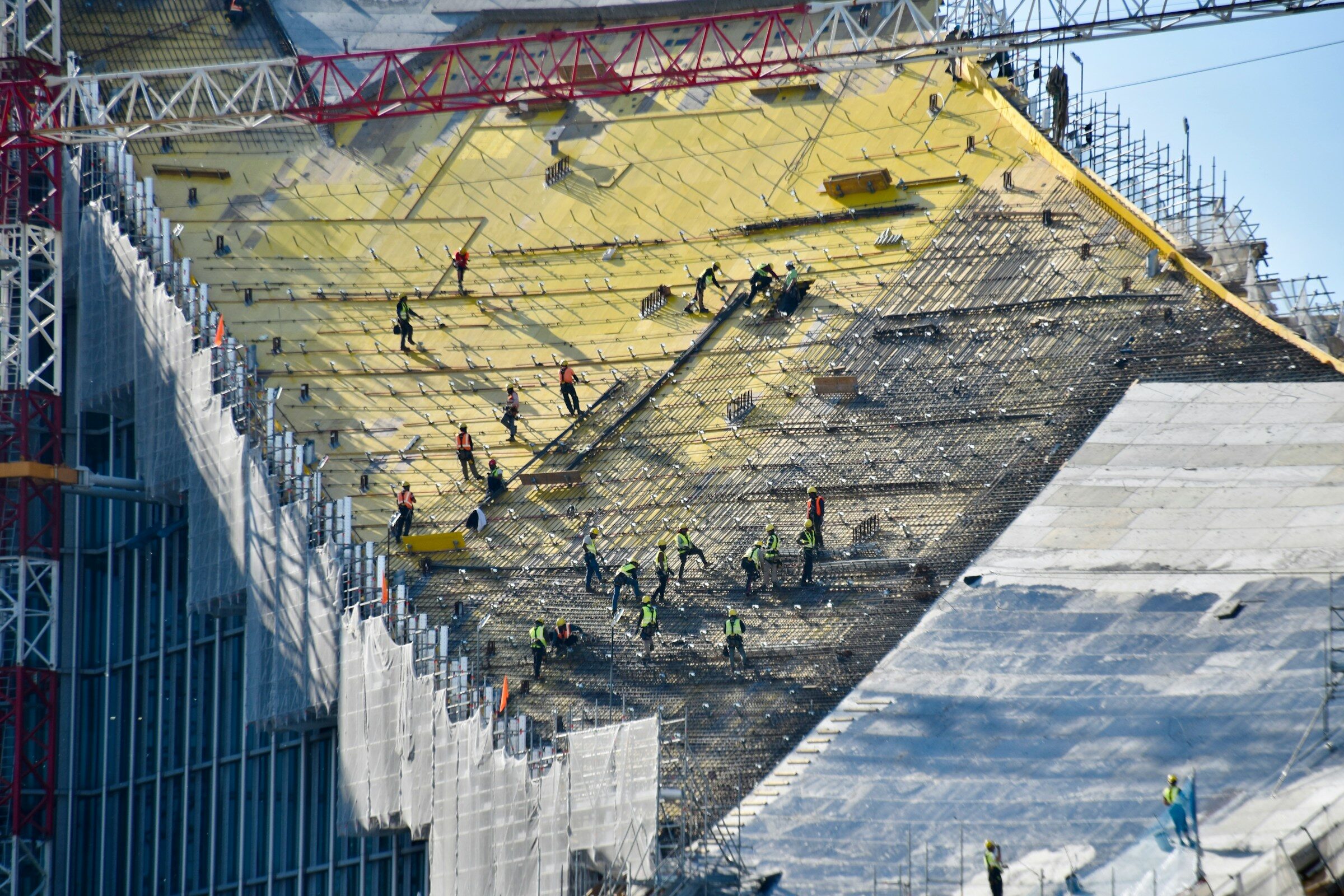
Workers on a large construction site with yellow sheeting
Count the seats at the busiest month, not the quiet one the demo was booked in.

Before you sign

Six questions for any construction ERP vendor in the UAE — including one four hours away.

Ask them in the demo, with your own contract on the screen.

  1. 01

    Show me a progress bill from BOQ to PINT-AE, with retention deducted.

    In the demo, with a real contract. If the VAT is calculated on the gross before retention, ask again.

  2. 02

    How do variations reach the costing?

    If the answer is a spreadsheet beside the system, the system does not do variations.

  3. 03

    Can a site engineer enter a delivery from the site?

    On a phone, offline, forty kilometres from the office. Otherwise the stock is wrong by lunchtime.

  4. 04

    How is subcontractor retention tracked back-to-back?

    Per certificate, per contract, released by date — not in the subcontractor’s memory.

  5. 05

    What happens on day fifteen of the guarantee?

    Ask what “implemented” means in the refund clause, and who does the migration from your current sheets.

  6. 06

    Will you tell me a spreadsheet is enough?

    For a one-crew subcontractor, it is. Anyone who never says so is selling.

Construction cranes towering over a city skyline

No office in the Emirates

Walk one contract with us, LOA to final account.

Message us on WhatsApp or book a call. We will tell you whether the answer is a spreadsheet, a product or a build — and show you the progress bill either way.

Start on WhatsApp

Questions UAE contractors ask

Ten straight answers, starting with the office.

No. We are an engineering team in Kochi, India — a four-hour flight from Dubai, ninety minutes apart on the clock, the same working week. Construction systems get a kick-off visit, a staging environment you can log into every week, and a written monthly report. If you need a vendor with a Dubai support desk on call, several rank for this search; we will say so.

None of the vendors ranking for “construction ERP software UAE” publishes a price; every one asks for a demo. General UAE ERP pricing runs per user per month (a Dubai reseller lists Odoo at about $20, Dynamics 365 at $95, NetSuite at $99), with construction modules and implementation on top. We quote a fixed scope after walking one real contract from LOA to final account with you.

VAT at 5% applies on the certified value invoiced on each interim payment application; retention is deducted from the gross before payment and the VAT treatment on retention follows the FTA’s rules on the date of supply for retention payments, which the system must apply rather than a person remembering. Imported materials may fall under the reverse charge. We point you at the FTA for the current text and build the system to read the rates from configuration.

Yes. Subcontractor certificates are raised against the main certificate for the same period, retention deducted at the contract rate, advances recovered, and WPS evidence attached where site labour is involved; retention receivable and payable are shown per contract with release dates.

Yes, on a phone, with offline capture for deliveries, timesheets and progress photos that sync when the connection returns. A construction system that lives only in the office is a set of accounts, not an ERP.

The commercial logic FIDIC contracts need — interim payment applications, variations, extensions of time as records, retention and performance security tracking — is built in; the contract documents themselves remain your consultant’s. One international vendor ranking here sells FIDIC support as a module; we treat it as the default shape of a UAE contract.

Timesheets by project and trade feed payroll; WPS SIF files are generated on MoHRE’s timing; end-of-service benefit accrues per worker under UAE Labour Law and shows as a liability in the accounts rather than a surprise at demobilisation.

A one-crew subcontractor with a handful of live jobs is better served by the accounting package it has, a disciplined BOQ spreadsheet per job and a WPS bureau. The system earns its place when there are several concurrent contracts, subcontractors below you, retention in both directions and a bank asking for cost value reconciliation.

Buy when the contracts are standard and a product ranking here passes the test: one progress bill from BOQ to PINT-AE with retention deducted, in the demo, with your data. Build when the way you cost, certify or subcontract is unusual and demos keep ending in “we can configure that”. We build; we still say “buy” when it is true.

You keep everything: the code, the database, the documentation and the plan. No notice period measured in quarters, no data held hostage.

Walk one contract with us, from LOA to final account.

Book a Free Strategy Call Takes 60 seconds · UAE contractors · The findings are yours to keep · No long-term contract
Email TechAuditPros
info@techauditpros.com
Send Email