Key Takeaways
- Garments break generic ERP on five things: the size-and-colour matrix, fabric consumption and GSM, cut-to-pack ratios, CMT and job work, and style-level costing.
- Indian apparel is roughly 2.3% of GDP and 45 million jobs (industry figures); most units run on Tally, Excel and WhatsApp, which is why the search is so large.
- A garment ERP must handle job work as first-class: fabric to dyeing, cut panels to a CMT unit, back as finished pieces — with GST challans and returns.
- The vendor test: load one real style with its matrix and ask the system to plan fabric, cost the style and track a job-work lot. Most demos cannot.
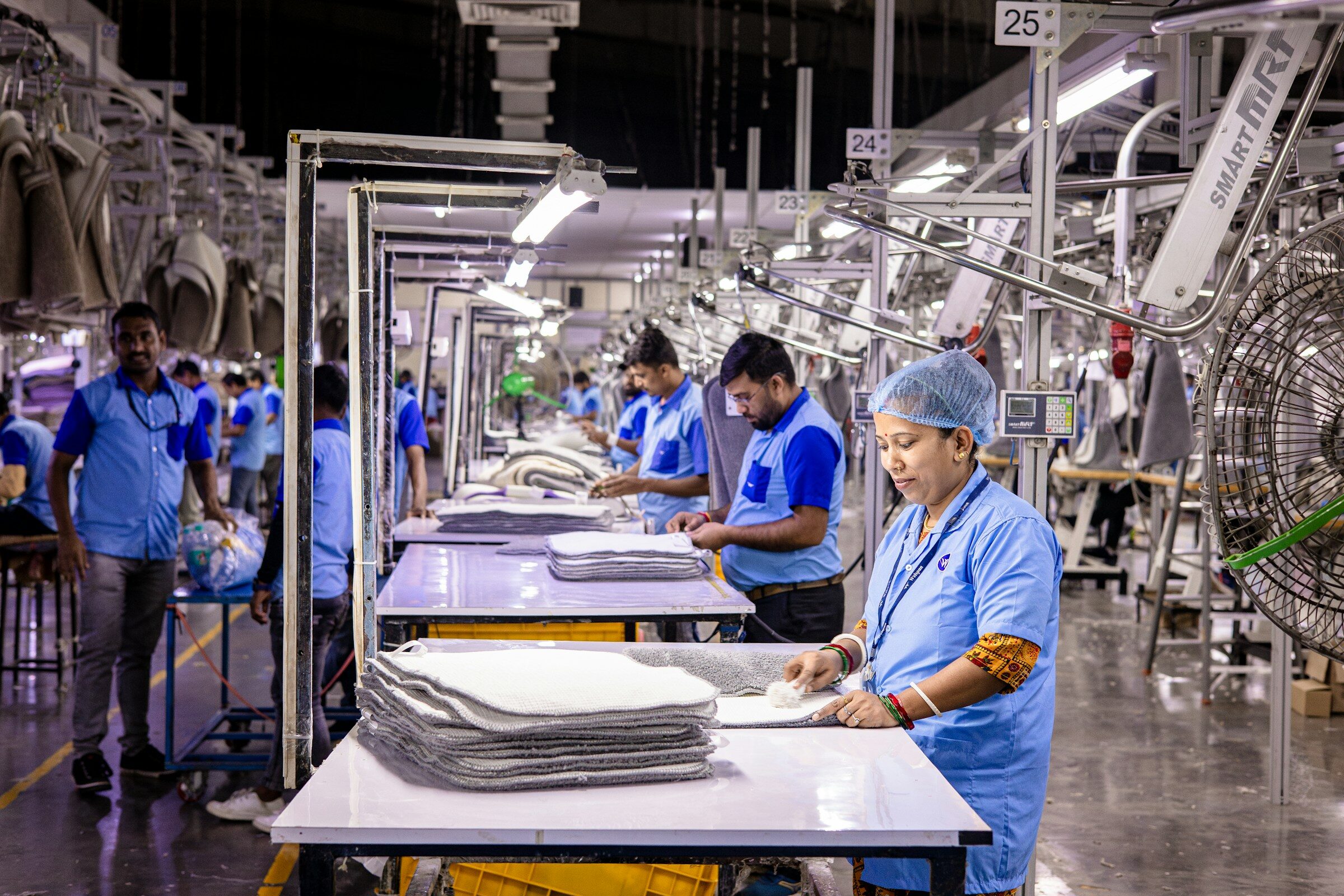
Garment manufacturing ERP software exists because a garment is not a widget. One style comes in six sizes and four colours (a 24-cell matrix, each cell an SKU), is cut from fabric whose consumption depends on GSM and marker efficiency, passes through a cutting room, a sewing line and often a CMT job-worker, and is costed at style level with fabric, trims, labour and job-work charges. Generic ERP, and Tally, see a product with a quantity. This article explains the five things that break generic systems, what a garment ERP does about each, the Indian compliance detail around job work, and the one test that separates a real garment system from a relabelled one.
Five Things That Break Generic ERP
- The size-and-colour matrix. Style A in S–XXL and four colours is 24 SKUs that must be planned, cut, sewn, packed and sold as one style and as 24 items at once. Generic ERP makes you choose.
- Fabric consumption and GSM. How many metres of 180 GSM single jersey per piece depends on size, marker efficiency and shrinkage. Fabric is the largest cost; guessing it is guessing the margin.
- Cut-to-pack ratios. A buyer’s order for 1,200 pieces in a 1:2:3:2:1 size ratio drives the cut plan, and the cut plan drives fabric issue. The ratio is a first-class object.
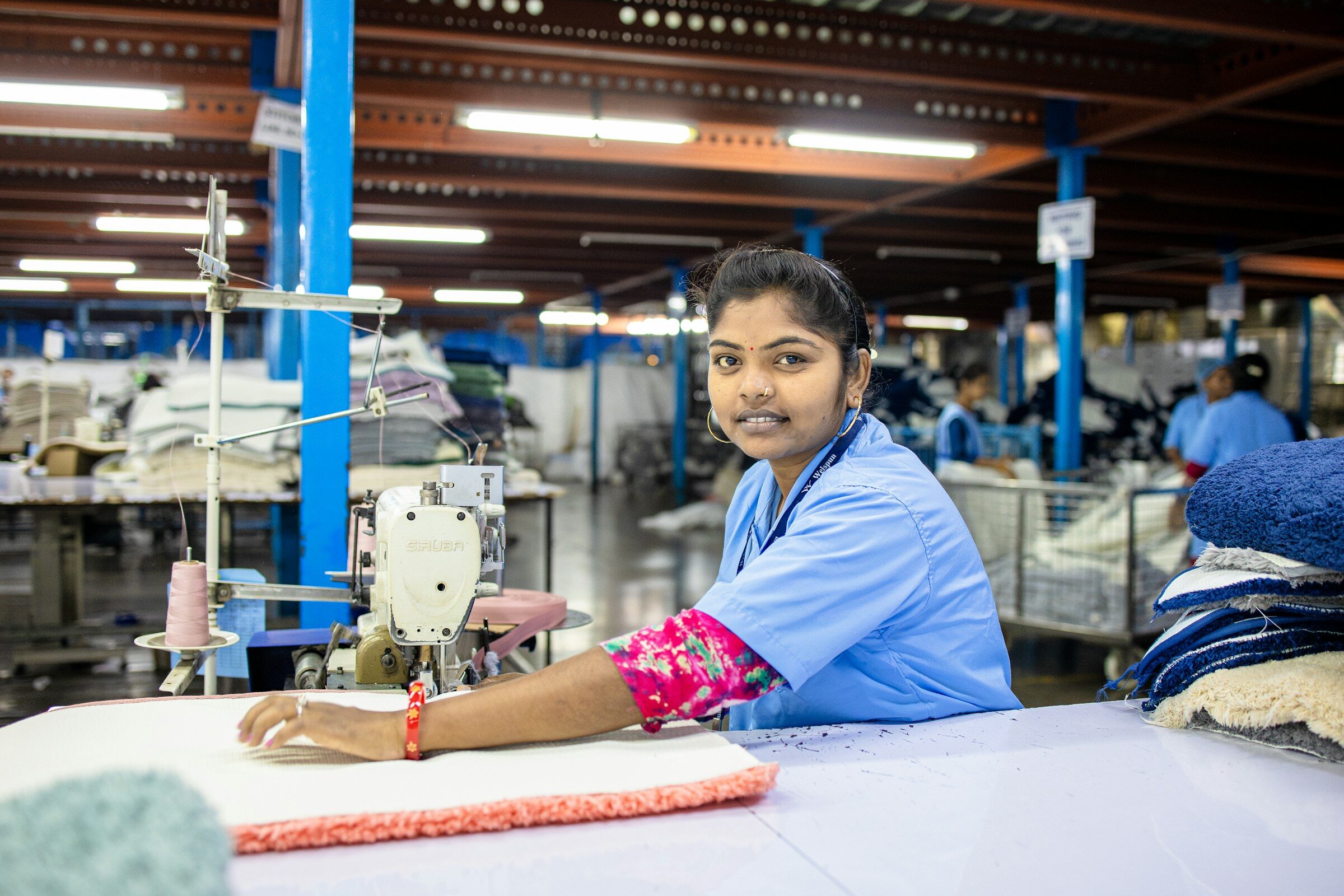
- CMT and job work. Cut panels out to a sewing unit, garments to washing or printing, back as finished pieces — with the pieces still your stock, and GST challans, return time limits and ITC-04 reporting attached.
- Style-level costing. Fabric at actual consumption, trims by BOM, labour by operation or piece rate, job-work charges, and a target FOB or ex-factory price against which the style either makes money or does not.
What a Garment ERP Does About Each
| Problem | Garment ERP answer | What to check in a demo |
|---|---|---|
| Matrix | Style as parent, size×colour grid as children, planned and reported both ways | Enter one style with a 6×4 grid in under two minutes |
| Fabric | Consumption per size, marker efficiency, shrinkage, lot-wise fabric stock with GSM and width | Plan fabric for a 1,200-piece order and see the shortfall by lot |
| Cut plan | Ratio-driven lay planning, bundle tickets, cut-to-pack tracking | Change the ratio and watch the fabric requirement change |
| Job work | Challan out, return in, WIP at the job-worker, charges to the style, GST reporting | Send a lot to a CMT unit and receive it back short |
| Costing | Pre-costing at quote, actual costing at close, variance by style | Compare quoted and actual cost on one closed style |
| Compliance | GST splits, IRN, e-way bills on despatch; export documentation | One despatch from packing list to e-way bill |
The Indian Detail: Job Work and GST
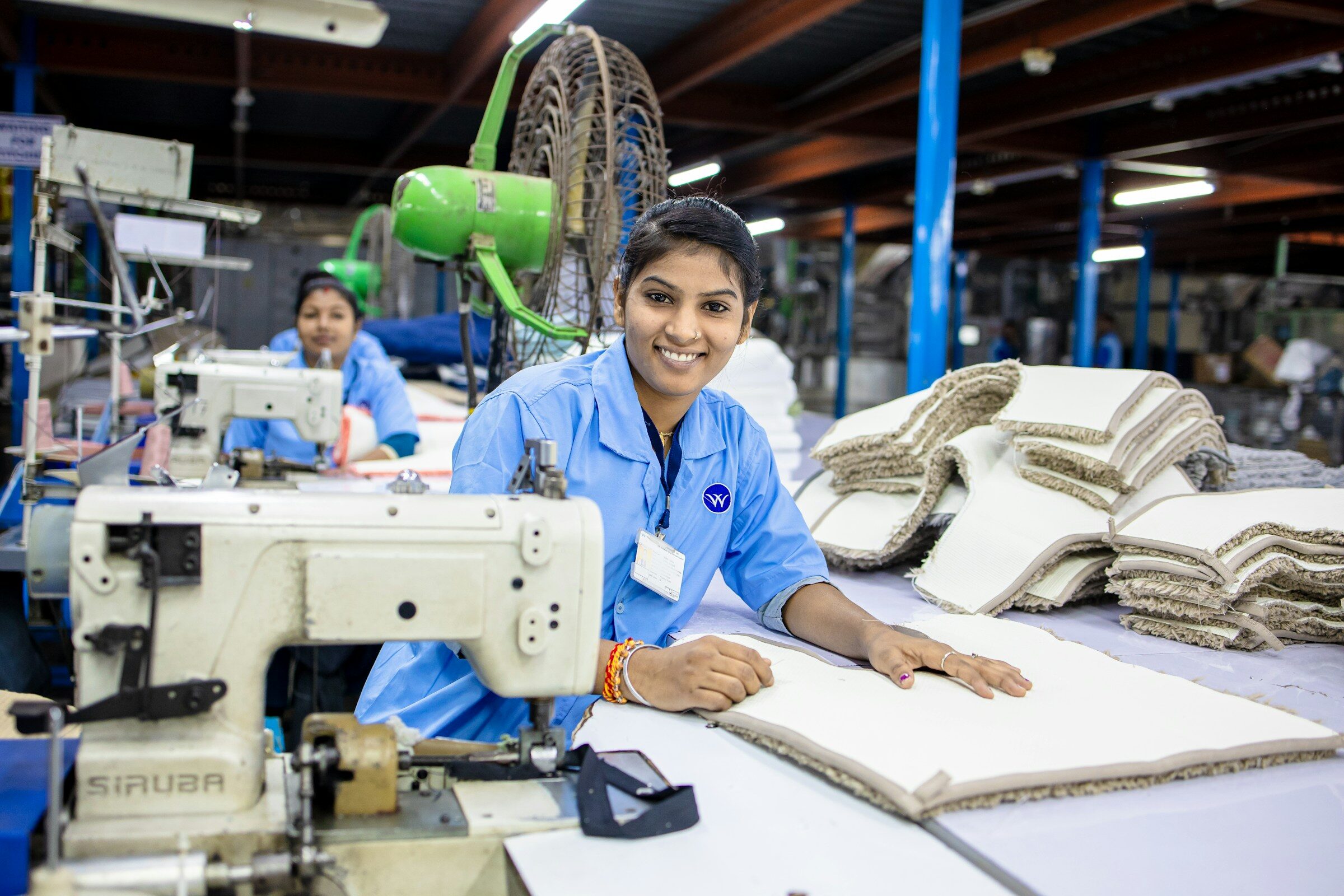
Most Indian garment units run on subcontracting. Fabric goes to a dyeing or printing unit; cut panels go to a CMT sewing unit; finished garments go for washing. Every movement is a delivery challan under GST, every return has a time limit beyond which the movement is deemed a supply, and the periodic ITC-04 return has to reconcile what went out and what came back. Do this on paper and one lost challan becomes a tax problem.
A garment ERP treats the job-worker as a location: stock at the dyer is your stock at the dyer, with the challan attached, the due date visible and the charge posted to the style when it returns. That is the feature most units are actually searching for when they type “garment ERP”, even if they call it something else. The thresholds and time limits are the GST portal’s to state; the system’s job is to make them impossible to miss.
Buy, Build, or Tally-plus-Excel
Tally plus Excel is right for a unit under about thirty machines doing one or two styles for one buyer. Add discipline, not software.
Buy a sector product when your styles, buyers and job-workers have multiplied and the product demo passes the tests above with your own style. Indian garment ERPs exist for exactly this and some are good; the vendors ranking for this search in 2026 include Focus, Zyno, Apna, Vasy and others.
Build when your process is genuinely unusual — a made-to-measure workflow, a handloom cooperative’s weaver-wise costing, a Kannur exporter’s buyer-specific packing rules — and two demos have ended in workarounds. That is what we build for Indian units, and the Kerala handloom and garment version is why our Kerala page talks about looms.
Frequently Asked Questions
What is garment manufacturing ERP software?
A production and business system built for apparel: it plans and tracks styles as size-and-colour matrices, calculates fabric consumption by GSM and marker efficiency, drives cut plans from buyer ratios, treats CMT and job work as first-class with GST challans, and costs at style level. Generic ERP sees a product with a quantity; garment ERP sees the matrix.
Why can't a garment unit just use Tally?
It can, for accounts and GST, and should keep it. Tally cannot plan fabric for a size ratio, track cut panels at a CMT unit, or cost a style at actual consumption. A unit under about thirty machines with one or two styles can live on Tally plus Excel; beyond that the spreadsheet becomes the risk.
What is CMT and how does ERP handle it?
Cut, Make and Trim — sewing subcontracted to another unit. A garment ERP sends cut panels out on a delivery challan, holds them as your work in progress at the job-worker, receives finished pieces back (possibly short), posts the CMT charge to the style and reconciles the GST job-work return.
Which garment ERP is best in India?
Vendors ranking for this search in 2026 include Focus, Zyno, Apna, Vasy and others, alongside ERPNext and NetSuite with apparel extensions. Fit is decided by one test: load your real style with its matrix and a real job-work lot, and see whether the system plans, costs and reconciles it without a workaround.
How much does garment ERP cost in India?
Published Indian ERP guides put small and mid-sized implementations at roughly ₹60,000 to ₹20 lakh all-in and subscription products at ₹2,000–₹10,000 per user per month; sector garment products sit inside that range. The per-user line grows with every line supervisor given a screen, so model three years, not today.
Weighing up a system for your own business?
Book a free strategy call. We walk one real order through your business — from enquiry to invoice — and tell you honestly whether Tally plus discipline, a product or a custom build fits, including when the answer is “not yet”.
Book a Free Strategy Call