
Key Takeaways
- Manufacturing ERP = generic ERP + the production layer (BOMs, routing, MRP, works orders, shop-floor booking, WIP, traceability, job work) + in India the compliance layer (GST splits, IRN via IRP, e-way bills, TDS/TCS).
- The four questions worth buying software for: what stock do we really hold, can we promise this date, what did that job cost, can we prove it.
- Job work is the Indian wrinkle: fabric at the dyer, castings at the machinist — still your stock, still your liability, and invisible to most generic systems.
- The test in a demo: one flow from works order to despatch to IRN to e-way bill, with your data. Products that need a “localisation partner” are not Indian-ready.
Manufacturing ERP software in India has to do two things generic ERP does not. First, the production layer: bills of materials, routing, material requirements planning, works orders, shop-floor booking, work in progress, traceability and — the Indian wrinkle — job work sent to and returned from subcontractors. Second, the compliance layer: GST splits at item level, e-invoice IRNs generated through the Invoice Registration Portal, e-way bills raised from the despatch, TDS and TCS where they apply. The products ranking for this search in 2026 — Sage X3, SAP Business One, ERPNext, Odoo, and Indian sector products like Zyno, Vasy and Udyog — all claim both. This article is how to test the claim, and the four questions that decide whether you need any of it.
The Four Questions Worth Buying Software For
- What stock do we actually hold? Per godown, per bin, including what is committed to open works orders and what is out at a job-worker. Not the figure in Tally, not Friday’s count.
- Can we promise this date? Needs the BOM, current stock, supplier lead times and shop capacity in one place. Without it, every date is a guess with a confident voice.
- What did that job actually cost? Material issued, hours booked, machine time, job-work charges, scrap. Averages hide the loss-makers.
- Can we prove it? Lot and batch genealogy forwards and backwards, with test certificates attached to the job — for the buyer’s inspector, the FSSAI or drug inspector, or the export documentation.
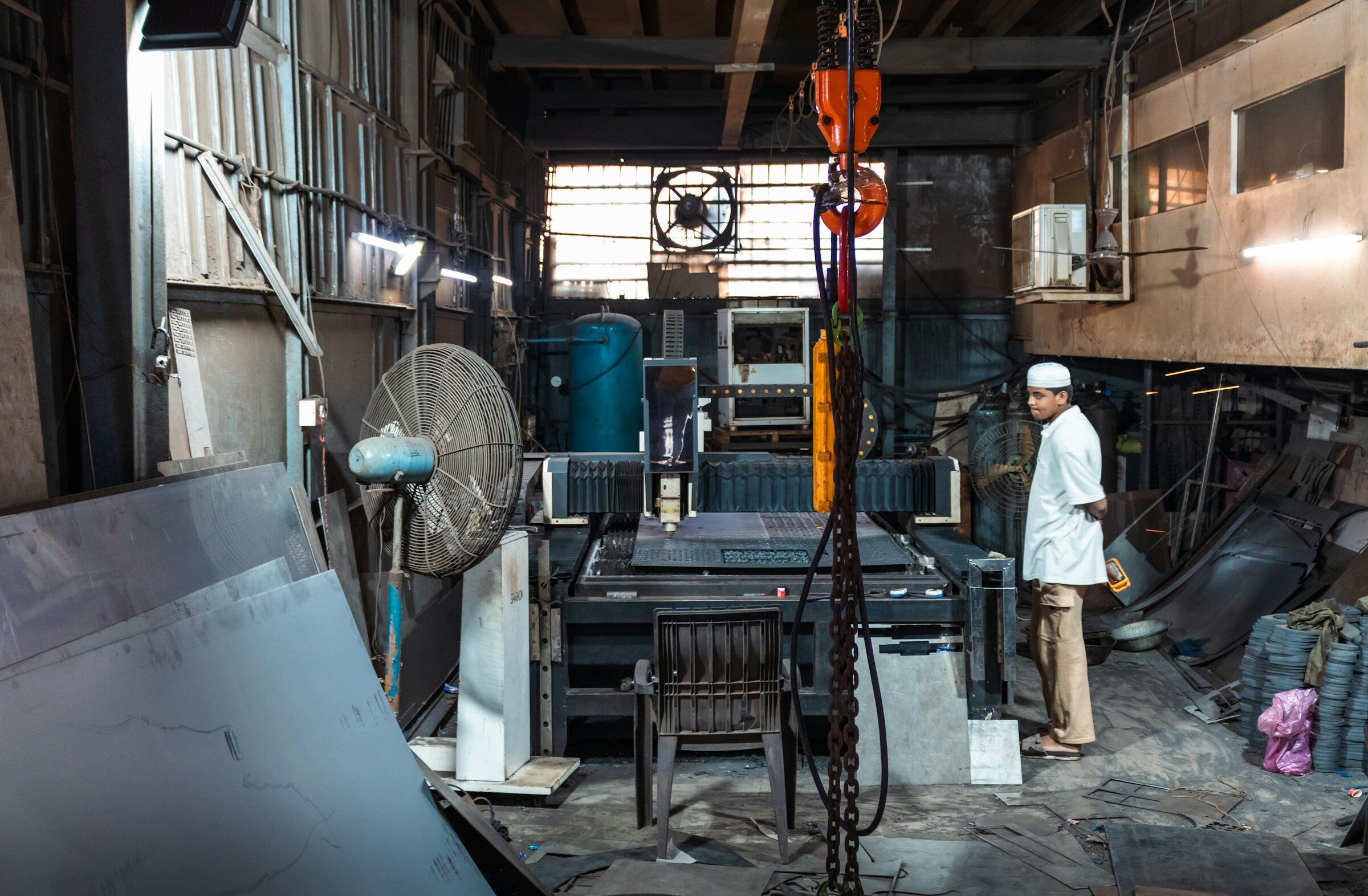
The Production Layer
| Module | What it does | The Indian detail |
|---|---|---|
| Bills of materials | Multi-level components with revisions | Size-and-colour matrices for garments; formulas and yields for food, spices, pharma |
| Routing and MRP | What to make or buy, and when | Supplier lead times that include transit from another state |
| Works orders and shop-floor booking | Labour, machine time, quantities, scrap where they happen | Piece-rate and contract labour booking |
| Job work | Material out to a subcontractor and back, with cost and custody | Delivery challans, job-work returns within the GST time limits, ITC-04 reporting |
| WIP valuation | Work in progress at any date | The year-end question the CA always asks |
| Traceability | Lot and batch genealogy | FSSAI, drug licence and export inspection evidence |
Not all of it on day one. The sensible order stops the most expensive daily problem first — usually stock accuracy or job-work visibility — and phases the rest as each piece goes into real use.

The Compliance Layer, as One Flow
Indian compliance is not a report at month end. It is a sequence of events on every despatch, and a manufacturing ERP either performs them in one flow or leaves your people re-keying between systems and the portal.
- The invoice carries HSN at the required digit level, the correct CGST/SGST or IGST split by destination, and the buyer’s GSTIN validated.
- The IRN is generated through the IRP (directly or via a GSP) with the QR code on the invoice, for businesses above the e-invoicing threshold; two-factor authentication applies from April 2026 per the current guidance.
- The e-way bill is raised from the despatch record — vehicle, transporter, distance — not typed again on the portal.
- TDS/TCS is applied where the thresholds require.
- The accounting entry lands in Tally (or whichever book of record the CA keeps) through the official integration.
Thresholds, digit levels and dates move; we point at the GST portal rather than restating them. The test does not move: ask to watch one despatch go from works order to e-way bill in a demo, with your data. We wrote the e-invoicing part in full at GST e-invoicing and your ERP.
Buy, Build, or Not Yet
Not yet is the honest answer for a unit under twenty people with one shed and standard processes: Tally kept clean, a stock count that is believed, a works-order book. Software does not create discipline.
Buy for most mid-sized manufacturers with standard production methods. Sage X3 and SAP Business One at the top of the mid-market, Odoo and ERPNext where a capable partner exists, Indian sector products where the sector fit is real — garments, pharma, food. Test the compliance flow and the job-work module before anything else.
Build when the process is the reason the business is still on spreadsheets and two demos have ended in “we can configure that”. We build that for Indian manufacturers, and the garment version is a page of its own: garment and textile ERP explained.
Frequently Asked Questions
What is the difference between manufacturing ERP and generic ERP?
Generic ERP handles finance, purchasing, stock and sales. Manufacturing ERP adds the production layer — bills of materials, routing, MRP, works orders, shop-floor booking, WIP, traceability and job work — and in India must run the compliance layer (GST splits, IRN, e-way bills, TDS) as one flow from works order to despatch.
Which is the best manufacturing ERP software in India?
It depends on production method and size. Sage X3 and SAP Business One lead the mid-market; ERPNext and Odoo are strong open-source options with Indian localisation; sector products (garments, pharma, food) often fit better than a global product configured for the sector. Test the job-work module and the GST flow with your own data.
What is job work in ERP and why does it matter in India?
Material sent to a subcontractor — fabric to a dyer, castings to a machinist — and returned as processed goods. It is still your stock and your GST liability, with delivery challans, return time limits and ITC-04 reporting. Generic systems make it invisible; Indian manufacturing ERP must track it.
Does manufacturing ERP handle e-invoicing and e-way bills?
It should generate the IRN through the IRP or a GSP and raise the e-way bill from the despatch record without re-keying. Ask to see one despatch go from works order to e-way bill in a demo; a product that needs a “localisation partner” for this is not Indian-ready.
Should a small manufacturer buy ERP or keep Tally?
Under about twenty people with one shed and standard processes, keep Tally clean and add discipline. Buy when stock accuracy, job-work visibility or job costing has become a daily cost. Build only when two products have ended in workarounds.
Weighing up a system for your own business?
Book a free strategy call. We walk one real order through your business — from enquiry to invoice — and tell you honestly whether Tally plus discipline, a product or a custom build fits, including when the answer is “not yet”.
Book a Free Strategy Call